larry bilotta

I hope you enjoyed reading this blog post. If you want to shorten your spouse's midlife crisis, click here.


  • Home
  • Blog
  • Signs of Midlife Crisis in Men & Women
Signs of midlife crisis in men and women

Quick Answer: What Are the Signs of a Midlife Crisis?

Common signs of a midlife crisis include:

  • Sudden personality or behavior changes
  • Emotional withdrawal or detachment
  • Increased irritability, anger, or blame
  • Rewriting relationship or life history
  • Loss of interest in family, marriage, or responsibilities
  • Impulsive decisions or escape behaviors
  • Questioning identity, purpose, or past choices

These signs are not random. They follow an emotional pattern that becomes activated under stress.

A midlife crisis doesn’t usually announce itself clearly.

Instead, it shows up through a pattern of emotional and behavior-based changes that feel confusing, sudden, and often painful for the spouse experiencing them.

While a midlife crisis can affect both men and women, the signs often appear very differently, especially in men. This page explains the most common signs of a midlife crisis, why spouses often experience the behavior as selfish or hostile, and how these patterns are created.

What a Midlife Crisis Actually Is (And What It Isn’t)

A midlife crisis is not simply boredom, dissatisfaction, or a desire for change.

It is a stress-activated emotional pattern, often rooted in unresolved childhood pain, that resurfaces when the pressure of life exceeds the person’s ability to manage their emotions. It is not:

  • automatically a desire for divorce
  • always an affair
  • proof the marriage is over
  • caused by the spouse

Understanding this distinction is critical, because mislabeling your spouse's behavior often escalates the crisis rather than calming it.

selfish midlife crisis spouse symptoms

Common Emotional and Behavior-Based Signs of a Midlife Crisis


Sudden Personality Changes

It can feel like you’re living with a different person. Values shift. Priorities rearrange. The way they speak, react, and connect no longer feels familiar - and that disorientation is one of the hardest parts.

Emotional Detachment or Withdrawal

Many people in midlife crisis emotionally pull away. They become distant, cold, or unavailable, even while physically present.

Rewriting History and Blaming the Spouse

During a midlife crisis, it’s common for a spouse to rewrite the past. Good memories get minimized, disappointments get magnified, and suddenly the story becomes that you were the problem. The blame feels unfair because it usually is.

Escapism, Fantasy Thinking, or Impulsive Behavior

Affairs, sudden independence, reckless choices, or fantasies about a “new life” usually aren’t about hurting you. They’re escape valves — attempts to outrun emotional overwhelm the person doesn’t know how to face.

Anger, Irritability, or Hostility


Tiny issues now set off reactions that don’t fit the situation. The patience and warmth you remember have been replaced by irritability and anger.

unreasonable midlife crisis

Signs of a Midlife Crisis in Men

When a man goes into a midlife crisis, it usually doesn’t stay contained inside him.

It comes out sideways.

Instead of talking about what he’s feeling, he pulls away.
Instead of reflecting, he becomes self-focused.
Instead of feeling connected, he feels trapped.

Many men in a midlife crisis describe a growing sense of pressure - pressure to perform, to provide, to be someone they no longer feel capable of being. Over time, that pressure turns into irritability, withdrawal, and a desire to escape anything that feels like responsibility or constraint.

To the people closest to him, especially his wife, this looks confusing and personal. But what’s driving it is internal emotional strain, not sudden indifference.

weight loss

Why a Midlife Crisis Can Look Like Selfishness

One of the most common things spouses say is, “He’s become selfish.”

And from the outside, that’s exactly what it looks like.

During a midlife crisis, a man turns inward. His focus narrows. His world shrinks to his own feelings, his discomfort, and his need for relief. To his spouse, it feels like he’s choosing himself - his freedom, his escape, his peace - over his family and responsibilities.

But here’s what’s actually happening.

This behavior isn’t driven by a lack of love or concern. It’s driven by emotional overwhelm and an internal identity collapse he doesn’t know how to handle. When the pressure gets high enough, survival takes over. Everything else fades into the background.


Understanding this doesn’t mean you tolerate hurtful behavior.
It means you stop interpreting it as a deliberate rejection.

That distinction alone reduces blame, lowers emotional escalation, and allows you to respond with clarity instead of panic - which matters far more during a midlife crisis than most people realize.

What is a "Chaos Kid"?

In a midlife crisis, selfishness can be seen in every word and every action, in every shape and form.  

Since the midlife crisis is born from a chaotic childhood, there are five statements that sum up the signs of the midlife crisis.

  1. Their needs are more important than your needs.
  2. They sell themselves as somebody they’re not.
  3. Any good thing you do or say they see as a threat.
  4. They want what they can’t have and what they have, they don’t want.
  5. They say what they don’t mean, and what they mean, they don’t say.

These five messages become five behaviors and they are very disorienting, but if you know what to expect and can recognize them, it can put you at ease, if only for a moment. 
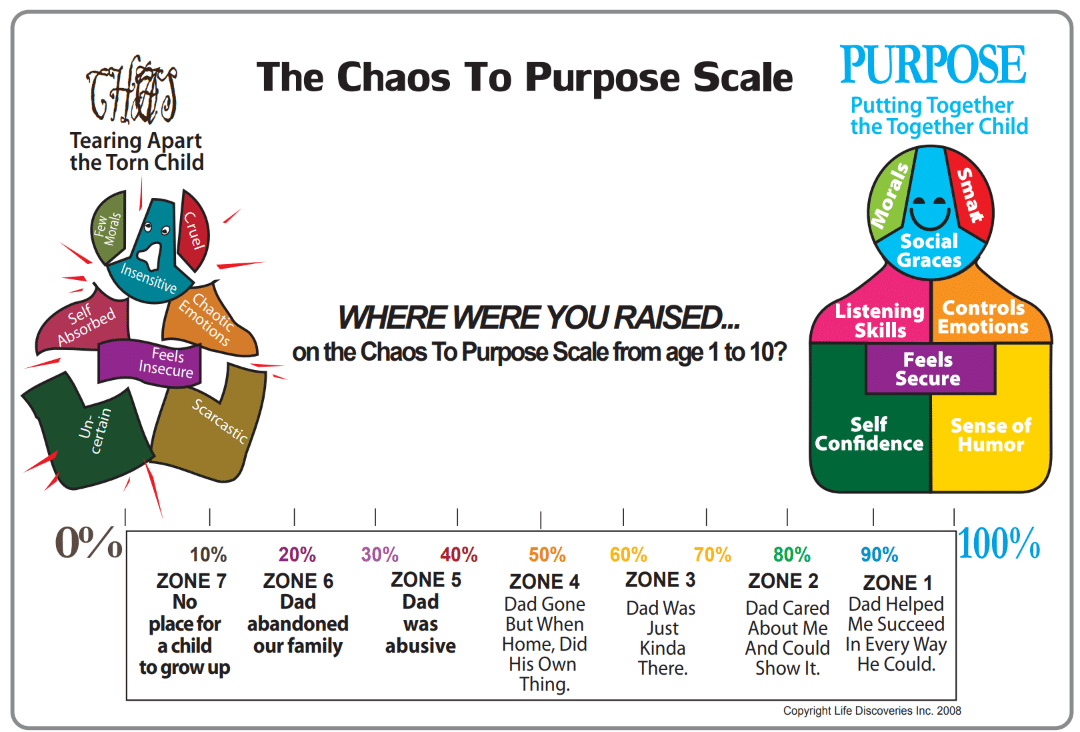
Chaos to purpose scale

Signs of a Midlife Crisis in Women

When a woman goes through a midlife crisis, it often doesn’t look explosive. It can look quiet.

She may feel a growing sense of emptiness, a loss of identity, or a deep questioning of her purpose - "I need to find myself" or "I need to find happiness."

Many women reach this point after years of putting everyone else first - family, marriage, children, only to wake up one day and realize they no longer recognize themselves.

What’s unsettling is not just the feeling itself, but how sudden and unfamiliar it feels.

When Do Women Go Through a Midlife Crisis?

For many women, a midlife crisis shows up during times of transition.

Children leave home. Roles change. Her body changes.

These shifts can quietly dismantle the identity a woman has relied on for years. For some, this period overlaps with menopause, which can intensify emotional sensitivity and internal questioning.

This isn’t about her wanting to leave a marriage or abandon a family. It’s about confronting the uncomfortable realization that the version of herself she's lived as for decades no longer feels complete. And this, combined with childhood pain, abandonment, or abuse - create the right setting for a midlife crisis.

Understanding this distinction changes how this stage is experienced - and how much damage it does to the relationship while it unfolds.

How Long Do These Signs Typically Last?

Midlife crisis signs often don’t build slowly.

They show up suddenly - and they intensify under stress.

A life change, conflict, or added pressure can act like a trigger, bringing behaviors to the surface that seemed to come out of nowhere.

How long a midlife crisis lasts has far less to do with age than most people think.

It’s driven by emotional patterns - and by how those patterns are responded to inside the marriage. When reactions turn into escalation, pressure, or blame, the cycle reinforces itself and the crisis stretches on.

When the emotional environment changes, the pattern often changes with it.

That’s why understanding how to respond matters more than waiting for time to pass.

What These Signs Do NOT Automatically Mean

Seeing these signs does not automatically mean:

  • divorce is inevitable

  • the marriage is over

  • there is always an affair

  • you caused the crisis

Reacting from fear or blame often fuels the pattern. Understanding it helps slow it down.

How to Survive Your Spouse’s Midlife Crisis

Surviving a spouse’s midlife crisis starts by gaining control over your emotions.

That doesn’t mean approving of hurtful behavior or pretending nothing is wrong.

It means refusing to escalate the situation when emotions are already out of control.

It means protecting your own mental health instead of getting pulled into every reaction.

And it means understanding the pattern before responding to the moment.

A calm, grounded response doesn’t fix everything overnight, but it often shortens the crisis instead of feeding it.

In a midlife crisis, CALM does far more than force ever will.

What are the signs of a midlife crisis in men?

They often show up as emotional withdrawal, irritability, increased self-focus, and sudden shifts in priorities.

Is my husband having a midlife crisis?

When changes feel out of character and don’t pass, you’re likely looking at a midlife crisis.

Why does my husband seem selfish during a midlife crisis?

What looks like selfishness is usually emotional overwhelm and unaddressed emotional pain from childhood, not a deliberate disregard for the relationship.

When do women go through a midlife crisis?

Many women enter a midlife crisis during major identity transitions, often triggered by a significant life event such as the death of a parent, a major move, or a child leaving home. When these changes collide with unresolved childhood pain, the emotional weight can become overwhelming and lead to a midlife crisis.

Can midlife crisis signs be reversed?

Yes. When you stop engaging with the emotional pattern and replace escalation with understanding, the crisis begins to lose its fuel. This is the core of the Environment Changer approach.

FREE ONLINE CLASS

The Chaos Kid Phenomenon

What is a midlife crisis?

From emotional collapse to awakening, a spouse or partner in midlife crisis is one of the most widely misunderstood, painful experiences you'll ever go through.

Watch this FREE online class presented by marriage and relationship expert Larry Bilotta, where he reveals the connection between childhood and midlife crisis.

Watch a quick preview of the class below.

We respect your privacy and will never rent, trade or sell your email address.


SHARE YOUR THOUGHTS WITH LARRY

Your email address will not be published. Required fields are marked

{"email":"Email address invalid","url":"Website address invalid","required":"Required field missing"}